
Written by
Baptiste Doisneau
On Earth Momentarily: a new grammar of care between body, mind and environment
OEM (On Earth Momentarily) is a wellness brand that reinvents daily rituals by connecting body care, emotional mindfulness, and minimalist aesthetics in a holistic vision of health.
OEM, an acronym for On Earth Momentarily, presents itself as a "new drugstore" that designs tools for everyday ailments: products that nourish, soothe, restore, hydrate, and calm the body and mind. Behind this definition, the brand builds a true grammar of self-care where every action becomes a moment of self-presence, rather than a simple utilitarian response to discomfort.
This approach goes beyond the classic pharmacy or drugstore model, which is often perceived as an exclusively functional space. OEM reinterprets the idea of the "drugstore" by transforming it into a cultural space for care: a territory where daily health, aesthetics, attention to emotions, and awareness of our way of inhabiting the world come together.


OEM is a California-based company specializing in home and health products that seamlessly articulate physical, mental, and emotional well-being. The West Coast location is not accidental: California is historically a living laboratory for well-being, design, and spiritual practices, a fitting setting for a brand seeking to connect technical formulas with a contemplative dimension.
Behind OEM is a Canadian-Japanese founding couple living in Los Angeles, whose hybrid cultural identity feeds the project. Shun Kinoshita, a designer from Tokyo now living in California, describes OEM as a "health product company inspired by care." Japan brings discreet and refined healthcare references, while North America brings a culture of experimentation and the circulation of ideas around well-being.
This identity is also reflected in the network of partner boutiques (Victoria, Venice, Malibu, etc.), which anchors OEM in places at the crossroads of design, lifestyle, and care. The retail spaces themselves become extensions of the OEM philosophy: spaces where objects are presented as tools for daily presence, rather than just consumer products.

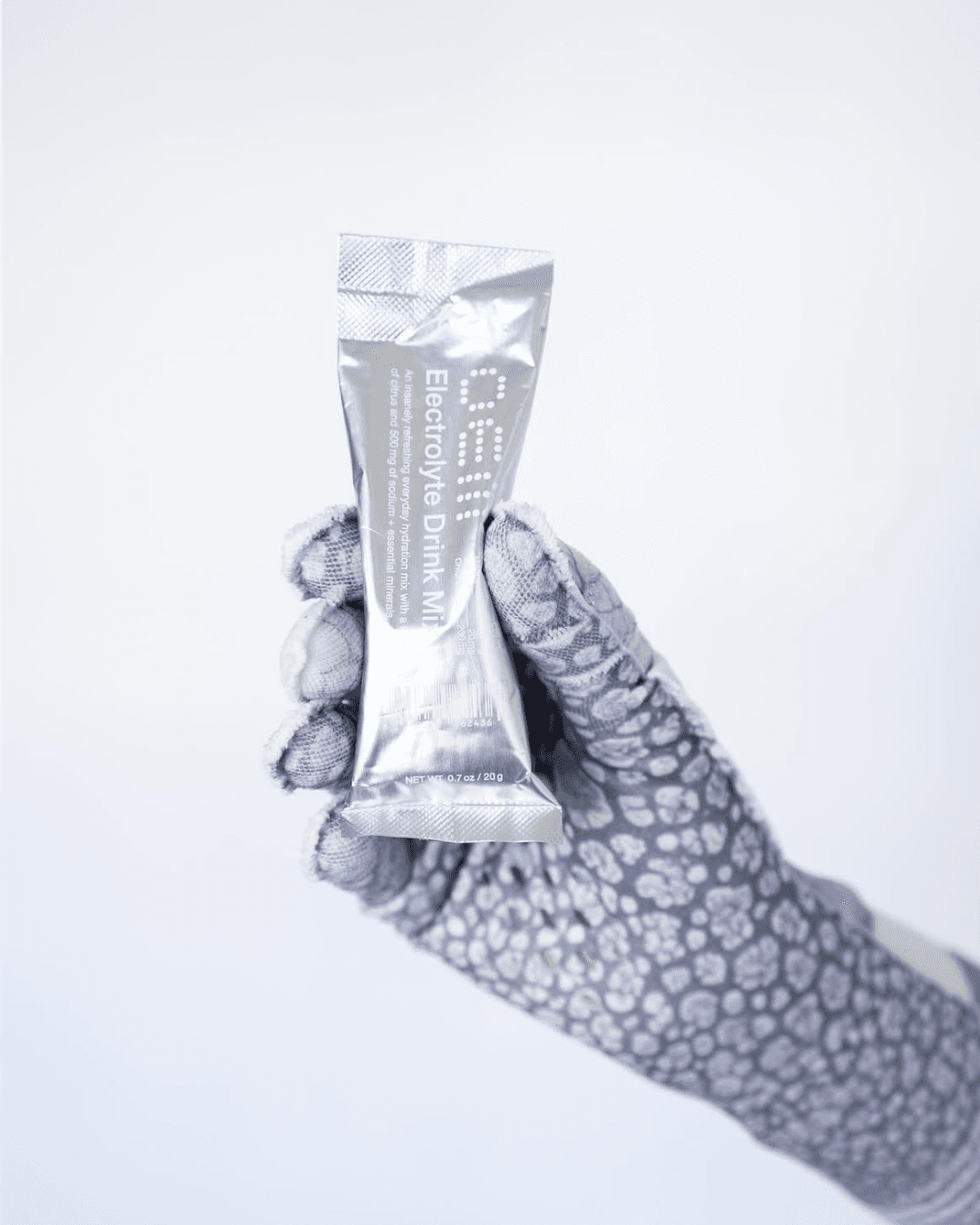
The name On Earth Momentarily places temporality at the center of the project: we are only "on Earth momentarily," and OEM proposes to make gestures of care the markers of this limited but precious presence. Each application of balm, each use of a cream, each incense stick lit is envisioned as a micro-ritual that recalls the finitude of our stay and the importance of inhabiting every moment of it.
OEM does not dramatize this brevity; on the contrary, it makes it the foundation of a philosophy of the everyday. Care is no longer reserved for moments of crisis or pathology, but becomes a continuous practice that weaves the day with meaningful micro-moments: a way of punctuating time with gestures that say "I am taking care of myself, here and now."
This vision manifests itself even in the minimalist and spiritually inspired design of the packaging: sobriety of shapes, neutrality of colors, clear typography, absence of visual over-stimulation. The container is designed to create a space of calm around the product, a "void" that leaves room for sensation and the awareness of the gesture, rather than the accumulation of marketing signals.


One of OEM's cultural pillars is the Japanese concept of kikubari, defined as a silent and intuitive form of caring for others. Kikubari consists of anticipating needs, sensing potential discomforts, and acting with tact and discretion to address them. It is a form of care without performance, prioritizing nuance over the spectacular.
OEM translates this principle into its products: objects that blend naturally into daily life, without imposing themselves visually or sensorially. The OEM lip balm, for example, is formulated to leave lips smooth and hydrated, but not shiny, with a texture that does not require constant reapplication. Discretion—no excessive shine, no overwhelming fragrance—is part of the care.
Kikubari thus becomes an ethic of design and formulation: OEM seeks less to declare "look how well we care for you" than to enable experiences of comfort that almost seem to go without saying. It is a subtle response to a wellness culture often centered on visible performance, spectacular promises, and the over-display of self-care.


At the heart of the OEM philosophy is a powerful idea: health is an interconnected journey of body, mind, and environment. The brand refuses to treat the body as a series of isolated symptoms; instead, it focuses on the connections between physical sensations, emotional states, daily habits, and the material atmosphere in which we live.
OEM products first act on the body: lip balms, soothing creams, restorative ointments, and hand sanitizers. However, these physical gestures are designed to carry a mental and emotional dimension. A soothing texture, the absence of irritation, and the consistency of a self-care ritual can contribute to a sense of tranquility, security, and self-esteem.
The environment is the other pillar of the project: hinoki incense, home objects, and olfactory atmosphere. By altering the sensory space, OEM also influences internal states. Certain scents are linked to memories, emotions, and specific atmospheres; OEM fragrances are selected to create micro-climates conducive to calm, focus, or emotional restoration.


Concretely, OEM materializes in a series of products designed as a daily toolbox: Nourishing Lip Balms, Soothing Cream, Restoring Ointment, Hand Sanitizer, Hinoki incense for the atmosphere. Each object meets a very concrete need (moisturize, soothe, restore, sanitize, transform the atmosphere) while fitting into a logic of global care.
The Nourishing Lip Balms are formulated to provide long-lasting hydration, without a glossy effect, with ingredients designed for comfort and repetitive application. The Soothing Cream and the Restoring Ointment target irritated or weakened areas, with restorative formulas that easily integrate into a daily routine. The Hand Sanitizer is designed to disinfect without being overly harsh on the skin, respecting the sensorial nature of contact.
The OEM Care Set, which brings together several of these objects, functions like a small ecosystem: a self-presence kit where one finds everything needed to protect, soothe, restore, and adjust the atmosphere. The idea is not to accumulate products, but to have coherent tools that accompany different dimensions of daily life: skin, hands, air, the moment.


In an article published by Mental Athletic, OEM is presented as a brand that works with the concept of Deep Emotional Energy: a way of thinking about emotions as neutral energy, charged by the way we perceive and respond to them. Emotion is not "good" or "bad" in itself; it is our representations and response strategies that give it its valence.
Mental Athletic evokes the ancestral origin of certain emotional patterns and the way they condition our current responses, as well as tools to "unlock" this energy. Within this framework, OEM brings a material dimension: sensory objects that can become supports for emotional regulation, pausing, and recalibration. Skincare gestures are transformed into micro-practices to work with this energy.
By aligning itself with this culture of well-being, OEM navigates between rigor (precise formulas, tangible effectiveness) and contemplation (care philosophy, connection to kikubari, attention to atmosphere). The brand does not limit itself to addressing hydration or protection needs; it participates in a broader conversation on the way our bodies, emotions, and environments intertwine in daily life experience.


OEM occupies a unique position in relation to the conventional medical system, which is centered on pathology, urgency, and protocol. Research into medical errors shows that institutional healthcare is a complex system, run through with organizational risks and communication challenges. OEM intervenes elsewhere: in the realm of micro-ailments, discomforts, and atmospheres, where the patient once again becomes an autonomous actor in their own well-being.
OEM products do not claim to replace medicine; they complement the landscape by offering daily self-care practices that restore power to the individual. Moisturizing one's lips, soothing irritation, disinfecting one's hands, adjusting the scent of one's space are all actions that rebuild a gentle relationship with the body and the world, in areas that clinical care does not manage.
In this dynamic, the OEM user is both a patient of themselves and a conscious consumer: they identify their daily ailments, choose their tools, and build their routines. OEM, by mobilizing kikubari, the temporality of On Earth Momentarily, and reflection on emotional energy, offers them a new way of living in their health: less performance-driven, more discreet, but deeply interconnected.
interconnected.

