Written by
Baptiste Doisneau
UTMB 2026: meeting 4 female ACG athletes with Mélanie from Own Ground
UTMB 2026 offered us an unforgettable experience, and it is with Own Ground: a platform committed to the visibility of women in outdoor sports, that we were able to meet four inspiring ACG athletes right after their races.
Invited by ACG to the UTMB 2026, we experienced an intense week, filled with emotions and encounters.
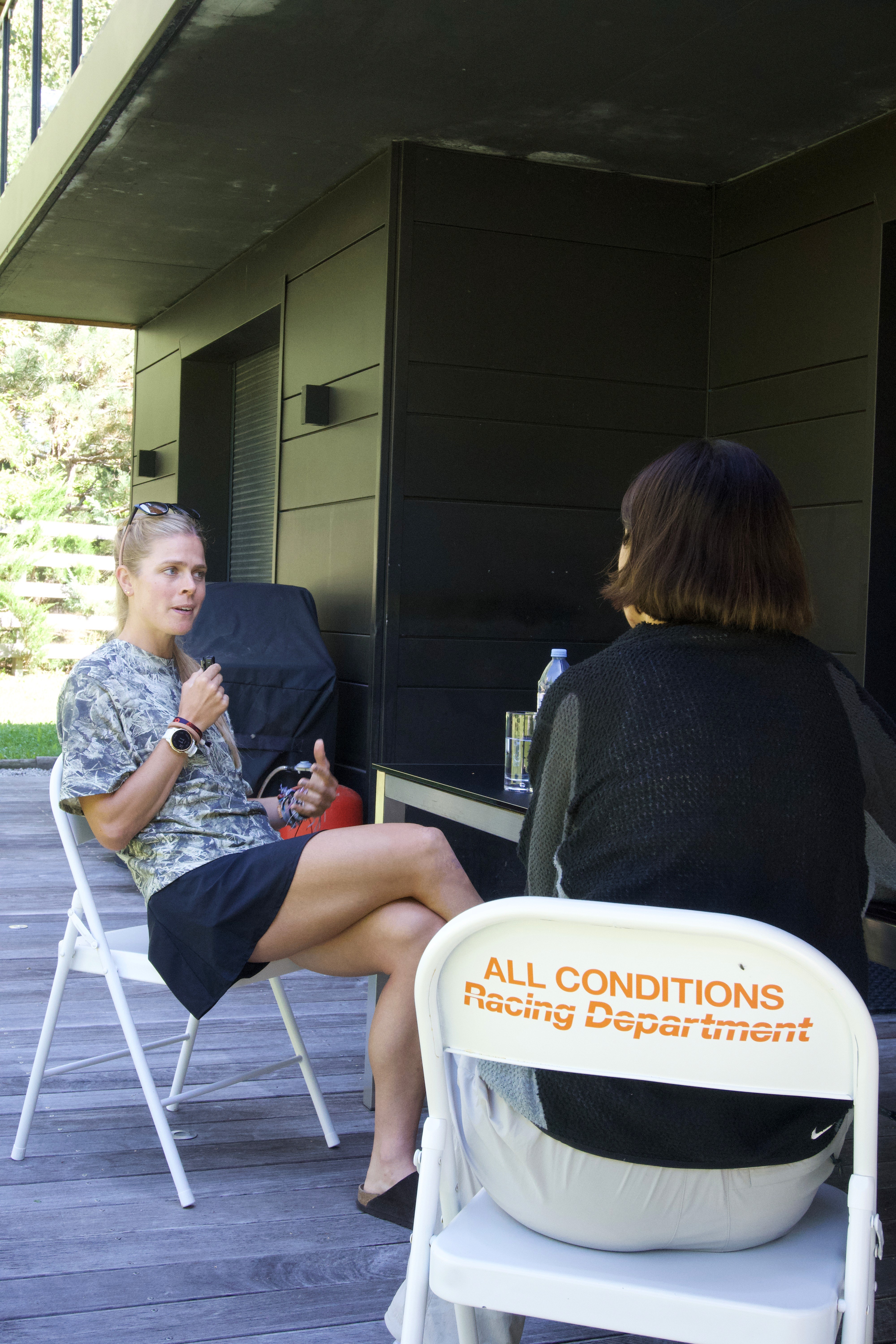
Alongside Mélanie from Mélanie, a women's collective that documents and highlights women in outdoor sports, we had the chance to interview four ACG athletes on Sunday morning, at the athlete house in Chamonix.
Two topics at the heart of the discussions: how to prepare for Chamonix from Asia and America, and what it is like to be a woman in this sport.
We asked our questions to Yao Miao (3rd on the CCC 2026), Bailey Kowalczyk (Top 5 Sierre-Zinal and Golden Trail World Series 2022), Jennifer Lichter (Winner of the Western States 100 2026) and Riley Brady (Winner of the Black Canyon 100k 2025).
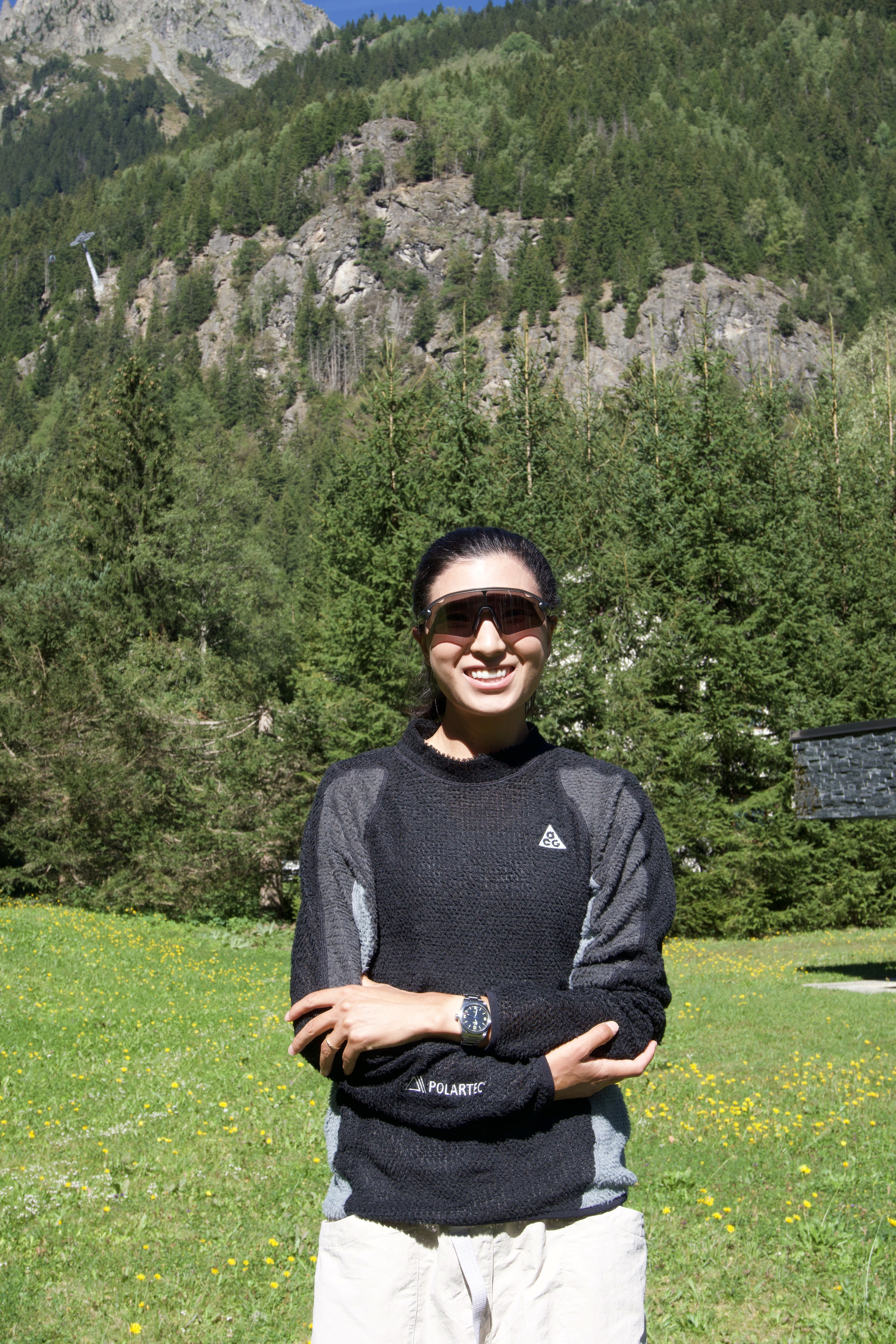
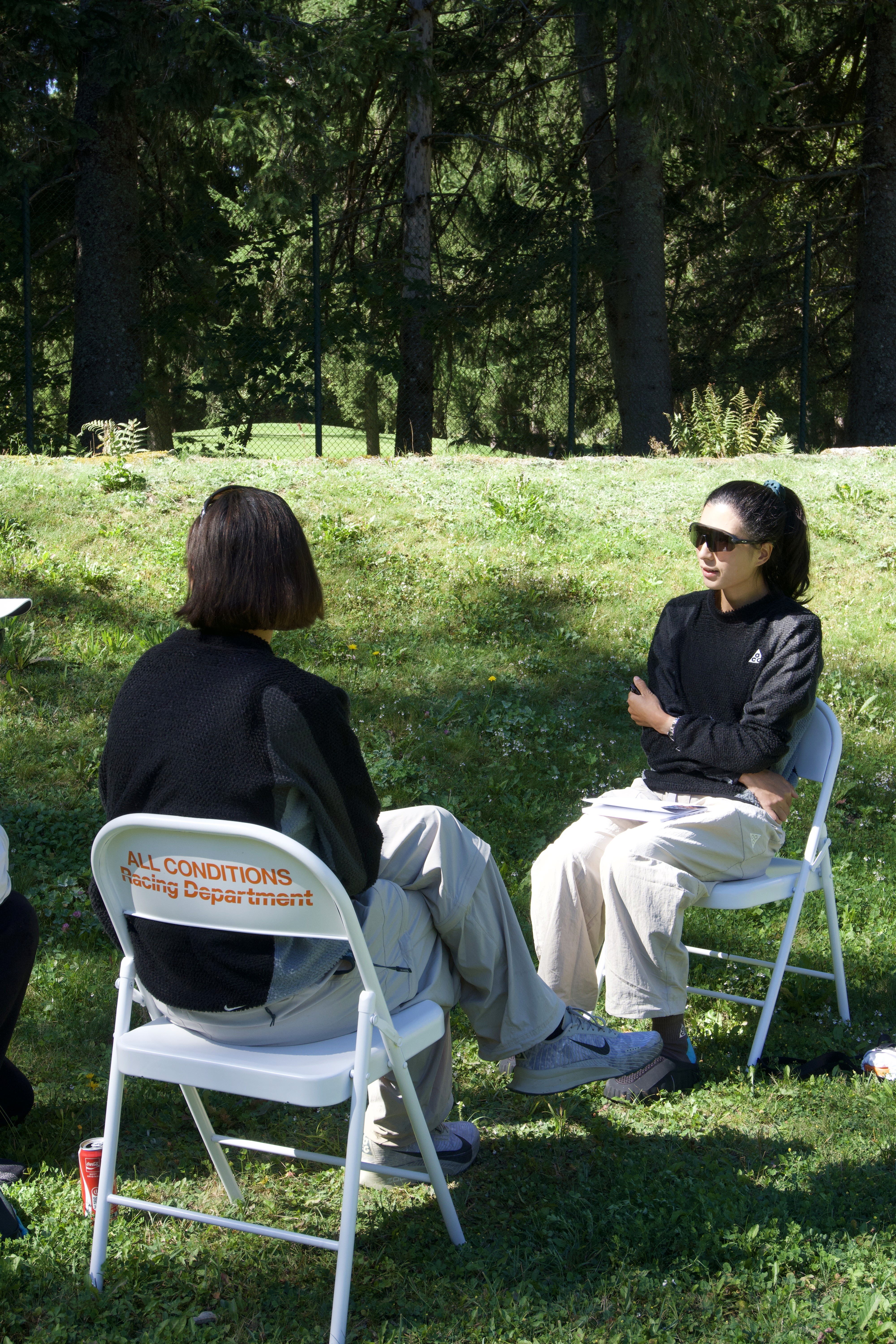
Yao Miao (Lijiang, China)
So, what is the biggest difference in Chamonix in terms of climate and terrain? How do you adjust your training sessions to stay competitive here?
Actually, in China, I now live in the city of Lijiang, in Yunnan, near very high, snow-capped mountains. This region has climbs and descents very similar to those in Chamonix. So I had already simulated this type of course during my training before coming here. For my sessions, I systematically integrate a comparable percentage of uphill and downhill work. That is my usual training in China, and since we were there a month before the race, I was also able to train directly on the course.
Has training in a different climate at home, hotter, more humid or drier, given you any particular advantage for running in Chamonix? And if so, how do you recreate these conditions in training?
The city where I live has a climate quite close to that of Chamonix, with comparable temperatures. Another advantage is that I live and train at high altitude: around 2,400 meters for the city, and even higher for the mountains, which is actually higher than Chamonix! So it doesn't pose any problem for me. During my daily training, the weather changes a lot there too: it can rain one minute, and a few minutes later, be very hot. It’s a challenge in training, but it’s also what makes a race like the CCC so demanding. The weather varied a lot during the event this year, but it didn't shake me because I was prepared for it.
You are the first Asian athlete to win the UTMB World Series Finals championship. Does this weight give you more of a sense of responsibility or freedom?
For me, it’s more of a sense of freedom.
What would you like young Asian women watching you to take away?
I think, above all, it is courage. For young athletes, they should dare to go, run more in Europe or in international competitions, face the competition and progress. And for young girls who are not athletes, I also hope they will have the courage to choose the life, the work they love, and to live according to their own lifestyle.
Finally, do you think trail running is ready to embrace more diversity, or is there still work to be done?
In the future, diversity will develop further. But right now, it is still in its infancy. There is still a lot to improve. And for professional athletes, their routine must also evolve.
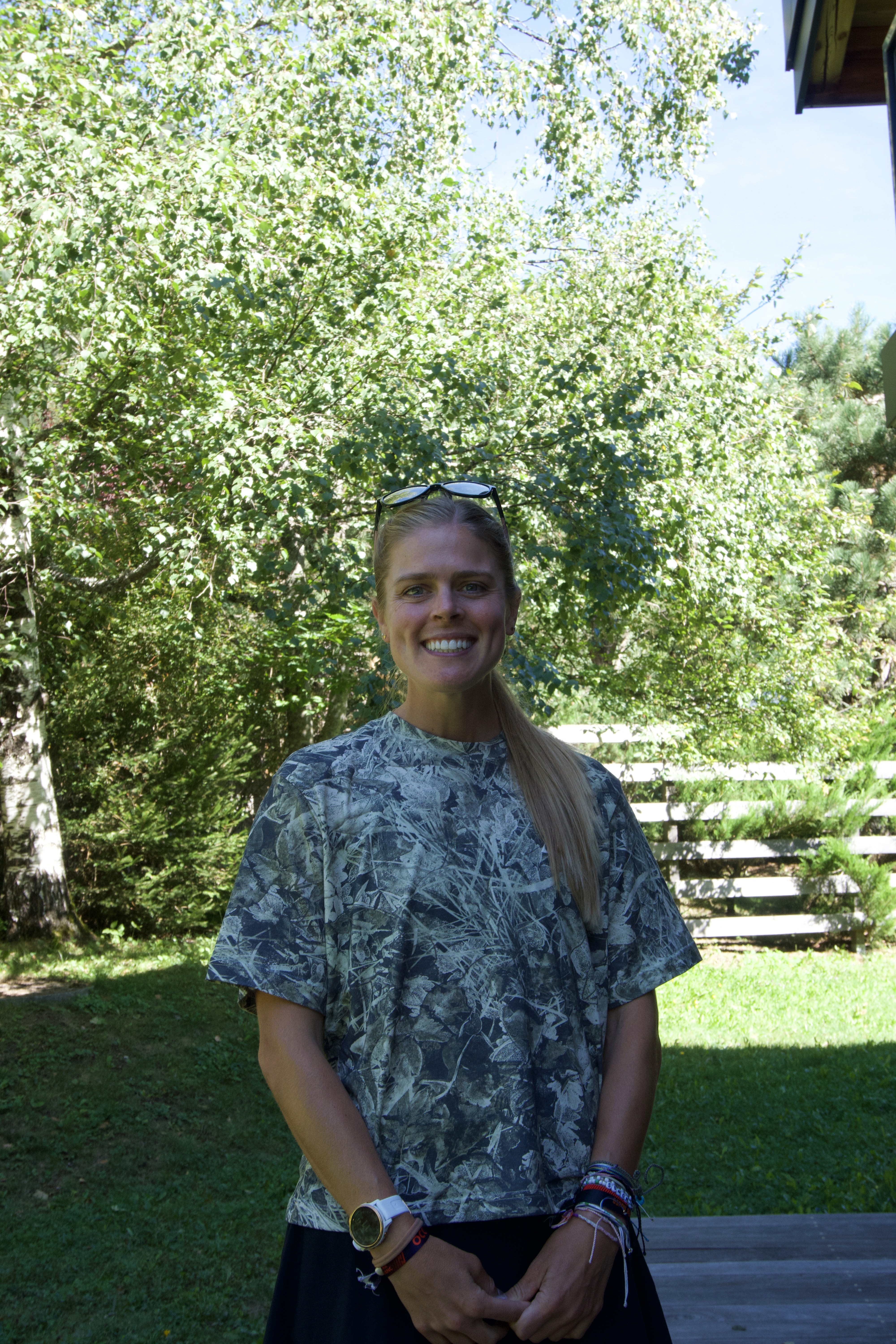
Bailey Kowalczyk (Boulder, CO, United States)
Let's talk about your training environment. Usually, it's very different from the Mont-Blanc massif, right? How do you organize your season to be specifically prepared for the climate, altitude, and technicality of Chamonix?
Yes, in fact, I arrived in Chamonix two months early this year. I really love spending time here on the trails. I race a lot in Europe, so I know this environment well and I know how to recreate certain conditions from Colorado. Over there, we also have very steep trails, so I can reproduce that. What is missing, however, are the long climbs and high altitude of Chamonix. So I try to accumulate as much positive elevation as possible and train on similar terrain. But coming early this year really helped me to absorb the environment and all the elements that would come into play during the race.
If you had to give just one piece of advice to a runner coming to Chamonix for the first time, whether to train or race, coming from a different climate or terrain, what would be the absolute priority to properly prepare for their arrival?
I think you have to focus on effort and time spent rather than distance. A lot of people arrive here and try to run the same distance as they do at home. But with much steeper elevation gains, the outings become much longer, and you risk burning yourself out even before the big day. So yes, effort and duration matter much more than miles. It's a bit like in life: you have to adapt your strategy so you don't redline before the essential part.
What would you want young women, especially those who haven't had inspiring role models, to see in you when they watch you run?
This is a question that is really close to my heart. In fact, one of the reasons I use my voice in this sport is that I want to be that role model I didn't have when I was younger. What I hope they will see is perseverance in the face of challenges, not giving up, and standing up for yourself. Trail running is a sport where everyone has a place, no matter their speed or their goals. And that's what makes it so beautiful. By showing my determination and using my voice, I hope other women will dare to participate in races that might seem intimidating to them... because they absolutely belong there, and we can do hard things together.
And if you could say something to your childhood self?
I would tell her: "It's not over until you decide it's over." Basically, don't give up just because someone tells you that you can't. It's up to me to decide whether it's over or not, not anyone else. No one has the right to tell me what I can or cannot do. During my career, I too often let others decide for me: telling me what I was worth, when to stop, etc. Today, I know that if I want to participate in a race, I go. If I want to keep going, I keep going. I am the one driving my life. So yes, never give up... but above all, never let anyone else decide for you.
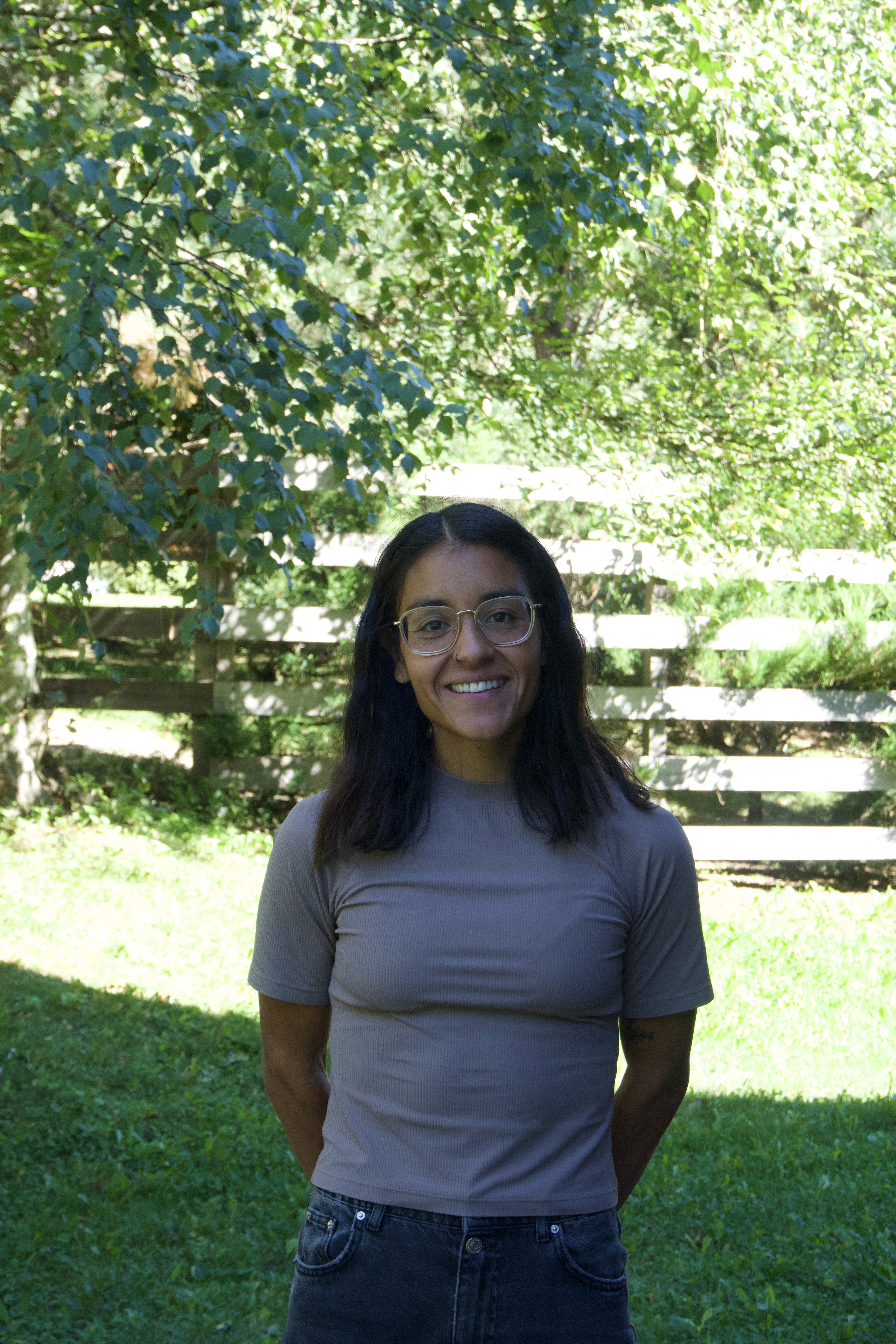

Jennifer Lichter (Missoula, MT, United States)
Your usual training environment is very different from the Mont-Blanc massif. How do you organize your season to be specifically prepared for Chamonix's climate and elevation gain?
In fact, I am in a bit of a special situation: the CCC was not my main race this year, unlike Western States. Usually, if I were focusing solely on Chamonix, I would try to find mountains in the United States that are similar. We have some, but they are often wilder, more brutal, and less accessible from cities. Most runners try to replicate this type of terrain with what they have on hand. Another strategy is to come earlier for a training session and get used to this kind of relief.
If you had to give just one piece of advice to a runner coming to Chamonix for the first time, to train or race, coming from a different climate, what would be the absolute priority in their preparation?
I think it's mostly the technicality. You can find steep climbs and descents everywhere, but what makes Chamonix unique is the technical aspect: the rocks, the narrow passages… You can't run everywhere. My advice is to learn to walk fast. Master the technique of the power hike (power climbing) so as not to force on terrain where running is impossible. You have to adapt to the terrain, not the other way around. And generally, when you do that, you do very well.
You broke the Western States record this year. Congratulations! What is it like to be part of this lineage of women who are rewriting what is possible?
Oh, it's everything I've worked for my whole life. It's what I dreamed of when I became a professional trail runner. Any professional female runner can tell you: we all want to be among the best. And today, to be in this position and inspire other women to achieve this… Sometimes, it feels like these performances are out of reach. But it's a good reminder: anything is possible if you truly believe in it. To become your own hero, in a way. I just hope I can inspire someone to say: "If I believe in it and work hard, I can do it." I am really happy to be experiencing this period in my career.
That is so inspiring! Seeing women like you breaking records and redefining limits is essential. We are seeing more and more powerful girls in this environment, and it is crucial for representation. We need more women on the trails. You also became a mountain guide. What does the mountain bring you that running cannot give you?
Probably strength. The mountains reveal you to yourself, you know? They demand a determination and resilience that you don't find elsewhere. Unlike a road, climbing a mountain is much harder. It forces you to draw from within, to give the best of yourself. And that's what's beautiful: mountains are strength incarnate. When I look at them, I think: "They are immense, powerful… You have to be just as strong to run with them, or in them." For me, they represent that strength.
What would you want young women, especially those who haven't had inspiring role models, to see in you when they watch you run?
Maybe joy in the process, whether the run is perfect or more difficult. And then… I don't know, that joy is important. And also, I want to show them that their strength can be theirs. That you can be strong in your own way, without following an imposed model. Strength does not have a precise shape, appearance, or weight. I hope to inspire young girls to say: "If I am my strongest version of myself, I can accomplish great things." And this strength can take a thousand different faces.
Finally, if you could say something to little Jennifer in Bogotá, what would it be?
Oh… I am so proud of her. She is so strong. I would tell her: "I am so proud of you. Despite everything that life has thrown at you, you refused to let your past dictate your future. I am proud that you stood back up, that you kept going, despite the trials and traumas. I would just give you a huge hug."


Riley Brady (Boulder, CO, United States)
How do you adapt your race and training strategy to the highly specific demands of the Mont-Blanc massif, especially when conditions can change rapidly between the valleys and the summits?
I live in Colorado, in the United States, where we have big mountains, but the terrain is very different from here. It is hard to find the same steepness, the same technicality. My main race of the season was earlier in the summer, so I had to rebound quickly to prepare for this new type of terrain. I tried to get out in the mountains as much as possible, to find steep sections… But being here, I realized I needed to adapt my training. This relief is really outside of my comfort zone, so next time, I will need to be more specific in my preparation.
What have you learned, through experience, about the key factors that make a difference in Chamonix? Pacing, acclimatization, fueling… Mental management, too. Which of these elements becomes the most decisive, both in training and on race day?
My goal with UTMB was mostly to learn. It was my first time here, and I think I succeeded. There are things on the course that I would do differently: equipment choices, fueling strategies… What really changes is that the races here are much longer and slower than what I am used to. The aid stations are also very different from those in the US: the food is not the same, and you have to prepare for that.
Now let's talk about your identity. How do you navigate being non-binary in a sport that, by nature, functions with binary categories, whether for races, equipment, marketing, or campaigns?
For equipment, I often use a mix of men's and women's apparel, and sometimes, it takes a bit of time to find the right size or fit. But ACG has been super supportive on this point. Competition-wise, the categories are binary, so I compete in the women's category and simply ask the commentators to use my preferred pronouns (they/them in English). It is not a perfect solution, but I don't see myself competing in a non-binary category due to a lack of competitors. So that's how I navigate between the two.
Have you ever felt like you had to choose between making yourself visible as a non-binary athlete and being taken seriously as a runner?
No, I have never been afraid of not being taken seriously as an athlete. On the other hand, there were moments when I wondered if I was going to be accepted and respected for who I am. But overall, the trail community is very open, and I have mostly had positive experiences.
How do you see the evolution of diversity in trail running today?
I think the sport could be more diverse, there is still progress to be made. But overall, people in this community are very welcoming and open to differences. I don't know if forcing diversity is the solution… Maybe the best way is to continue to be kind and respectful to everyone. Those are qualities that should exist everywhere, after all.