Written by
Baptiste Doisneau
Milan: immersion in the Unlimited Air universe of Nike
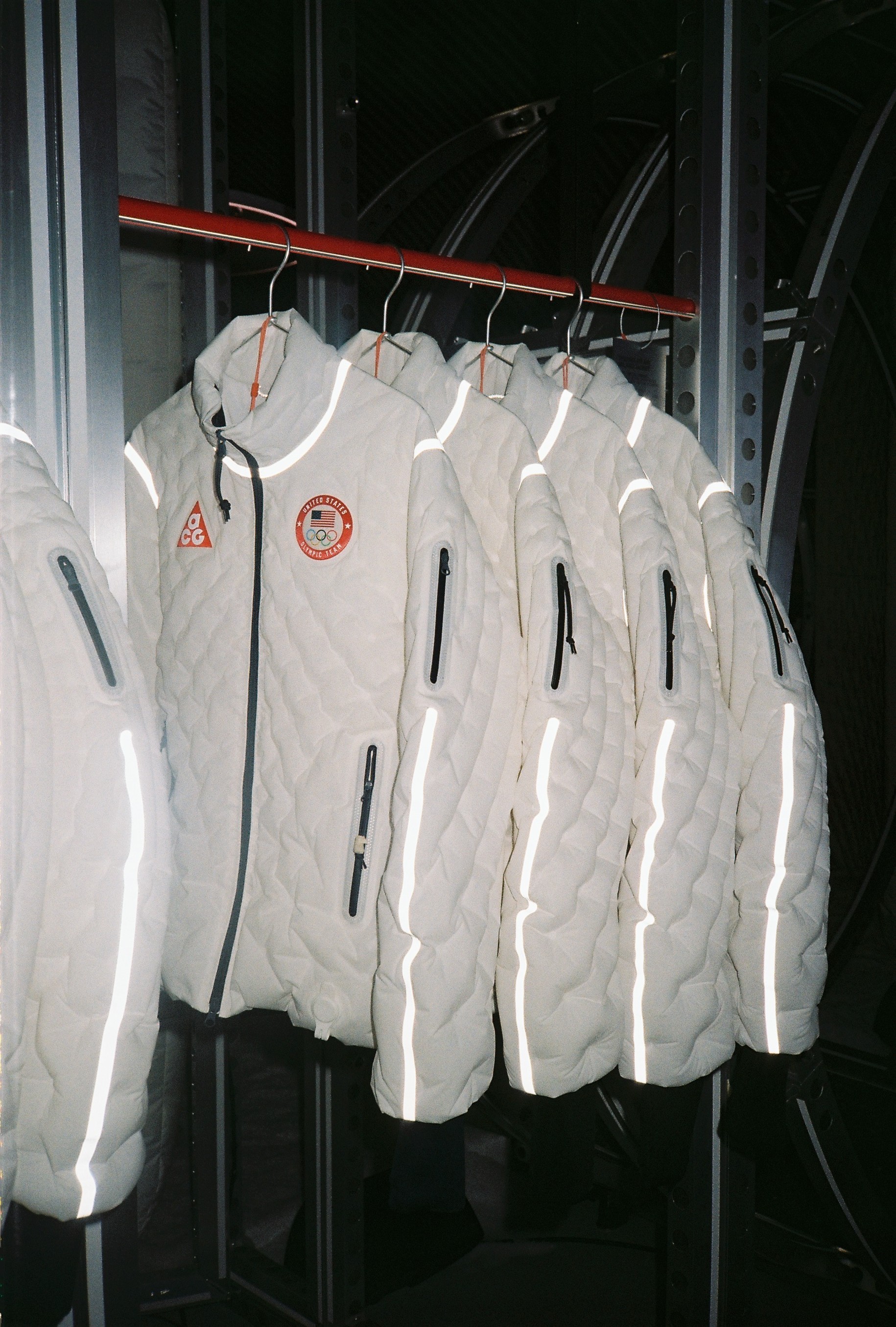
In Milan, Nike unveiled Unlimited Air, an immersive experience celebrating 50 years of innovation around Nike Air. The event showcased the new Therma-FIT Air Milano Jacket with A.I.R. (Adapt, Inflate, Regulate) technology, as well as Radical AirFlow, confirming A.I.R as a major innovation platform for athletic performance.
In Milan, at Drop City, Nike unveiled Unlimited Air, an immersive space celebrating Nike Air as a limitless innovation platform. Designed as a true experimental laboratory, the journey immerses guests in the behind-the-scenes process of the brand's research and development, showing how athlete insights transform into innovations capable of redefining the sports industry.
The sensory experience highlights three fundamental truths: Nike is the athletes' brand, its innovations continue to disrupt the industry's standards, and its proprietary A.I.R technology allows it to meet the demands of world-class athletes with products of unmatched performance.
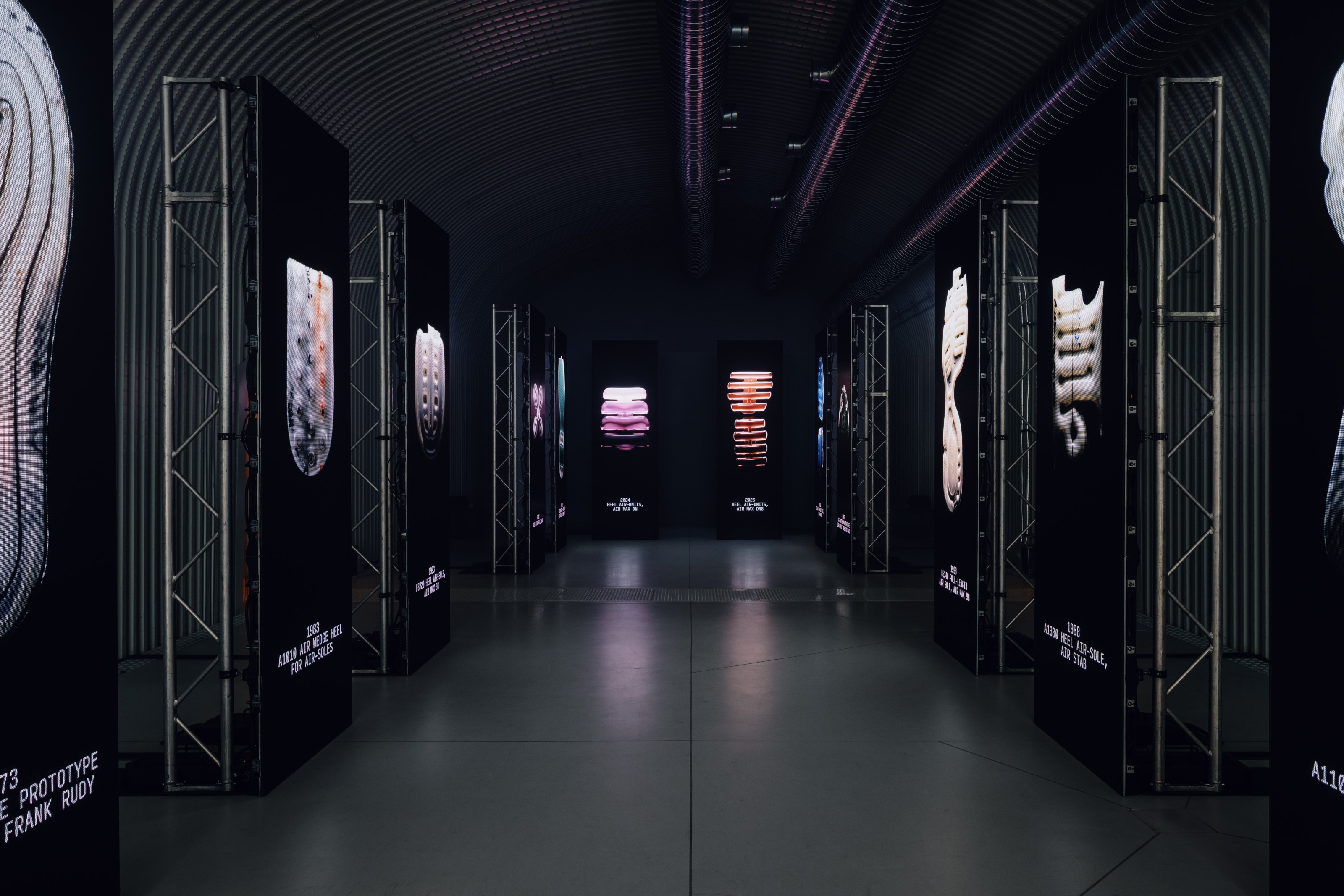
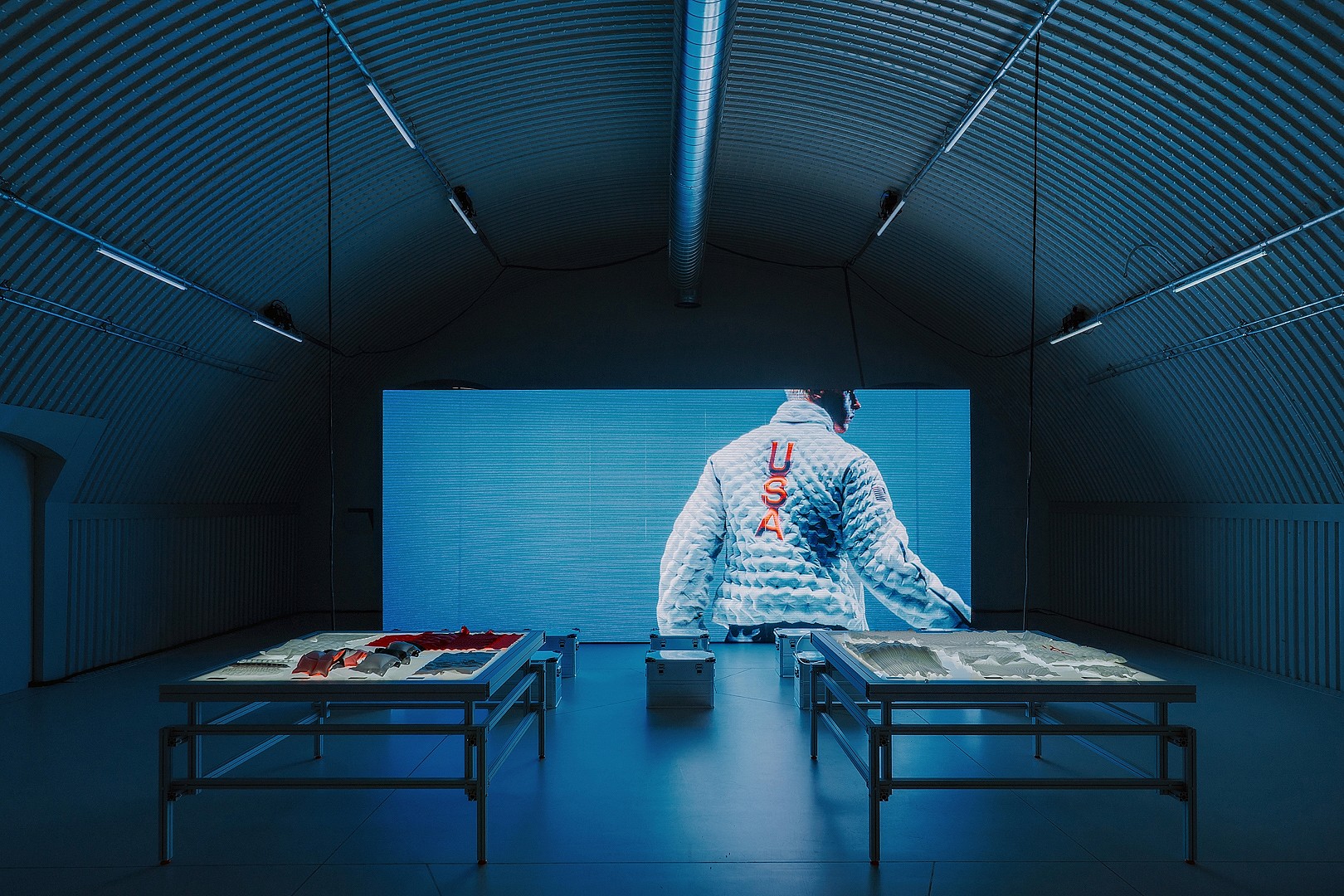
Guided by Martin Lotti, Chief Design Officer of Nike, the visit introduces the Air Archives, a living digital showcase bringing together sketches, prototypes, and creative experiments. This installation celebrates 50 years of continuous innovation around Nike Air. What started as a cushioning technology for the shoe has now become a central engine of athletic performance, boldly extending into the world of apparel.
This evolution illustrates Nike's ability to constantly push the limits of design and technology, making A.I.R a true creative platform.
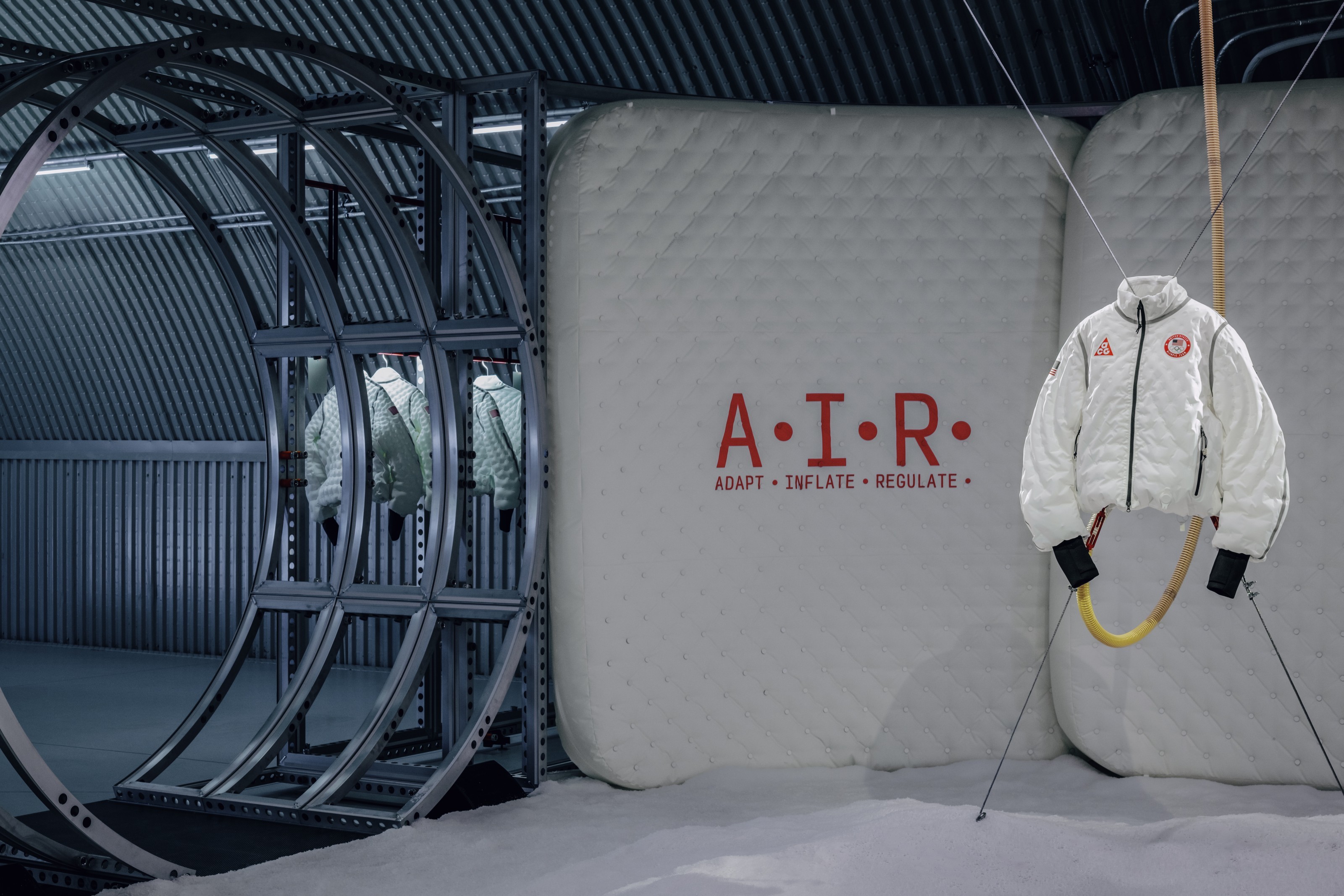
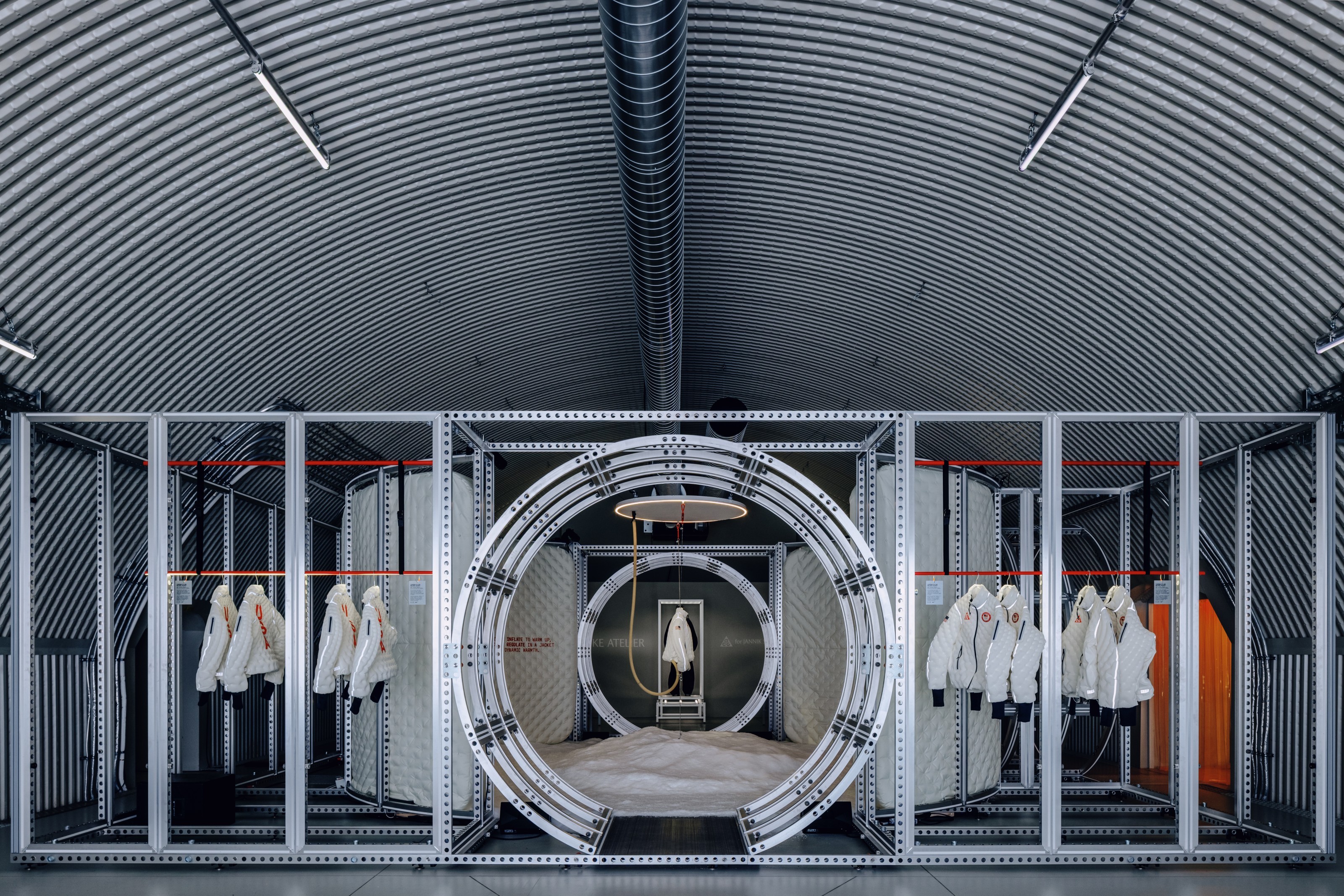
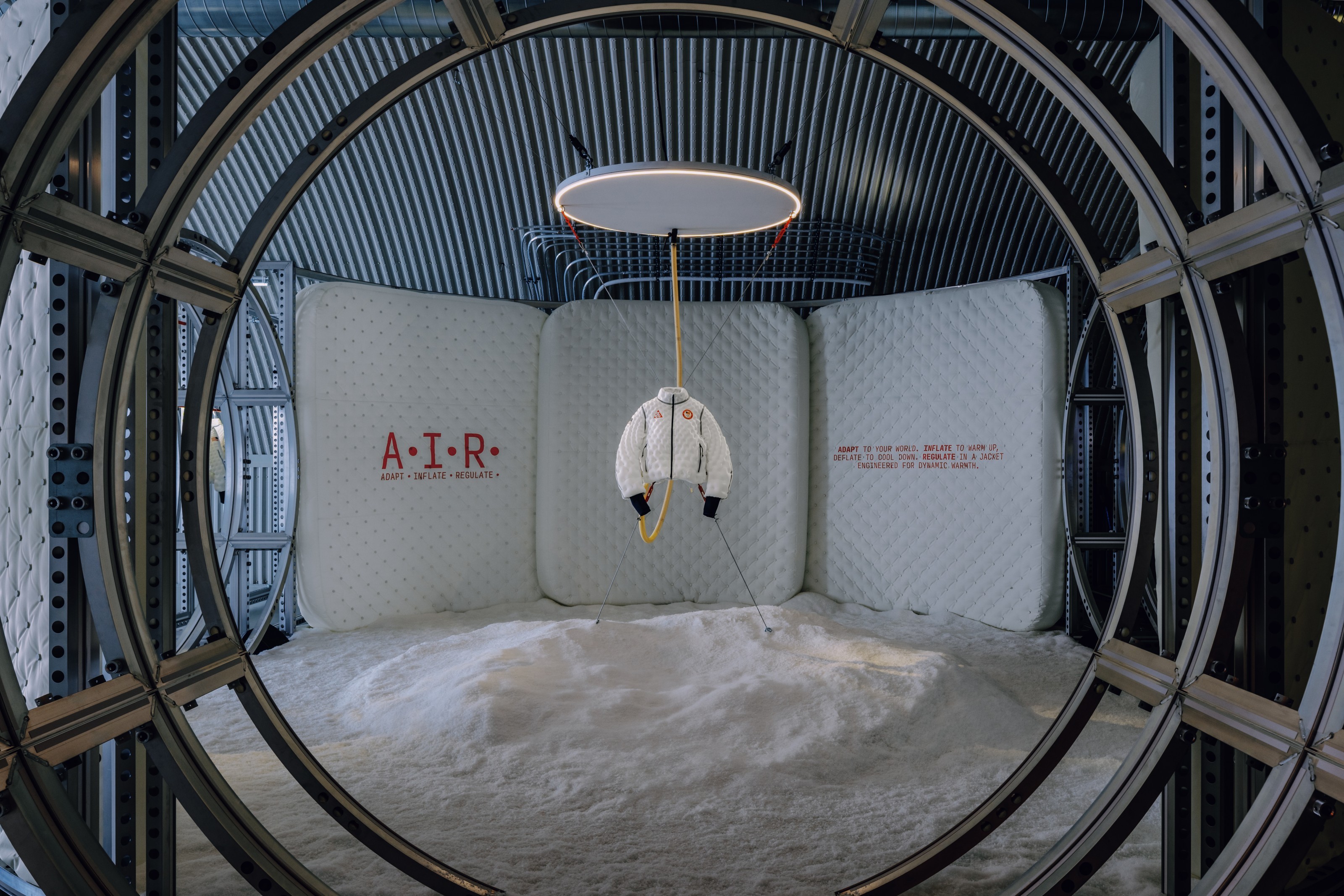
Symbol of this new era, the Therma-FIT Air Milano Jacket embodies the next step in Air innovation. Designed to meet a universal challenge, thermal regulation during movement, it introduces a major breakthrough in adaptive outerwear thanks to A.I.R. technology.
In a cold chamber recreating snowy conditions, guests were able to directly experience this innovation. The principle is simple yet revolutionary: adjust its level of insulation in seconds, without changing layers, by inflating or deflating the air contained in the jacket's baffles.
As one of the most technically advanced pieces in its category, the Therma-FIT Air Milano Jacket combines precision engineering and refined design. Its sculpted volumes are derived from data and body mapping developed by the Nike Sport Research Lab, ensuring targeted and optimized insulation. Worn by Team USA athletes during the winter medal ceremony, it stands as a testament to Nike Air's pioneering potential and announces a new frontier of performance-oriented design.
Martin Lotti is the Chief Design Officer of NIKE, Inc., where he oversees the entire product, conceptual, retail, and brand design. With nearly 30 years of experience at Nike, he has led major projects in the sports and lifestyle categories for men and women. He notably directed Nike's creative direction during global events such as the Olympic Games and the World Cup.
Former Chief Design Officer of Jordan Brand, he contributed to the exceptional growth of the brand, which has become the second-largest shoe brand in the United States. Born in Switzerland, a graduate in industrial design from the Art Center College of Design, and a former student of Stanford's executive program, Martin Lotti is recognized for his strategic vision of design, centered on the athlete and the elevation of human potential.
BD : You often talk about "the athlete" as a unique starting point. With the arrival of AI and new design tools, how do you preserve human instinct and emotion in Nike's creative process?
ML : I love this question. At Nike, everything always starts with the athlete. It somehow protects us: we are not just creating a product; we are seeking to solve a real human problem. Our mission is to support and elevate human potential.
Yes, we are a sports company, but at our core, our goal goes beyond sports. The slogan Just Do It can apply to a sporting performance but also to life in general.
Regarding AI, it is an extraordinary tool. It allows us to iterate and design faster and at an unprecedented level of precision. Combined with computational design and new manufacturing methods like 3D printing, it significantly expands the realm of possibilities.
In the past, our main limit was time. I remember a time when we sketched by hand and sent them by fax to factories. We had to wait. Today, we can model everything in 3D almost instantly. Our only limit then becomes imagination.
But the further we move towards digital and AI, the more we need to enhance the human aspect. The feel of materials, texture, emotion, creative intuition—all of this remains fundamental. For me, it is not an opposition between technology and humanity: it is a balance between extreme technicality and deep humanity.
BD : We are seeing a total fusion between technical Olympic apparel and urban fashion. How do you determine the moment when a purely functional innovation is ready to become a style icon?
ML : It is not us who decide: it is the consumers. We first design to solve an athlete's problem. If the product is truly distinctive and performs well, it will naturally be adopted on the street.
Take the Air Jordan 1: it was designed as a high-performing basketball shoe. But because it was excellent, it became a cultural icon. The same goes for models designed for trail running: they can be repurposed in an urban context, remixed, and stylized differently.
That is what sets Nike apart from a fashion house. Our starting point is always performance. That is what allows us to create new icons.
BD : How do you reinvent pillar technologies (like Air technology) without losing the DNA that has made the brand successful for decades?
ML : That is the beauty of the process.
We can either rely on the past or intentionally detach from it to create something radically new. Depending on the project, we choose between evolution and revolution. For some projects, we have deliberately forgotten traditional solutions. For example, for thermal regulation: historically, the logic was to reduce material to limit heat. Sometimes we have done the opposite.
In some cases, adding coverage or creating specific airflow can improve cooling. It sounds counterintuitive, but it is by questioning established rules that we innovate.
Reinventing does not mean betraying the DNA; it means solving problems in a new way and creating distinctive design.
Danielle Kayembe is an expert in product innovation and apparel development at Nike. She transforms experimental ideas into concrete market-ready solutions. Her most recent work, the Air Milano jacket, illustrates her ability to combine technological innovation, thermal performance, and visionary aesthetics.
Her approach is based on collaboration, experimentation, and the integration of athletic data. She designs inclusive products, tailored for different body types and suited to the demands of Olympic and Paralympic athletes.
BD : The Therma-FIT Air Milano jacket represents a bold step by integrating air directly into the fabric. What have been the biggest technical challenges in making this inflatable structure both thermally effective and aesthetically pleasing?
DK : We started by exploring materials. Very early on, we found that the initial versions were not durable enough. We conducted over 100 material explorations before arriving at the final textile. We wanted to maintain a soft and premium feel to the touch while allowing for the integration of inflatable structures. Finding this balance was a major challenge.
We also worked closely with the Nike Sport Research Labs. They collected thermal data on athletes in various cold conditions and at different effort levels. This data allowed us to precisely identify the areas of the body that required the most insulation. That’s why, on the final jacket, some areas have higher baffles while others are lower. This design reflects a thermal mapping based on scientific data.
We also tested different levels of inflation and insulation to determine the optimal height of the air compartments and the amount of air needed. It’s a process that combines science, design, and experimentation.
BD : You are working on product innovation. How does the data collected from athletes of all body types and levels influence the design of the next generation of sportswear?
DK : We place great importance on inclusivity. We work with a wide diversity of athletes and body types. For example, our ranges go up to 3XL because we believe that performance and health concern all body types.
During the design process, we analyze the user's lifestyle: who they are, how they train, in what conditions? We exchange ideas with athletes from around the world, from various disciplines.
We also share our innovations very early with Nike athletes to gather their feedback. For the Air Milano jacket, designed for Olympians and Paralympians, we organized several testing sessions. Feedback from Paralympic athletes directly influenced the shape and final adjustments of the product.
Our goal is not just to create a good product, but a genuinely high-performing product for athletes.
BD : In your opinion, what will be the next technological frontier in sportswear?
DK : I think it’s A.I.R.
It’s a unique platform, and Nike's approach is different from that of other brands. Some have already experimented with inflatable clothing, but often as added elements. What we are exploring goes further: A.I.R becomes a sensory experience integrated into the garment. It is no longer just a component, but a dynamic interaction with the product.
Being able to adjust the volume, modulate the insulation, or transform the silhouette creates a new relationship between the athlete and their clothing. It’s no longer an “on/off” system, but an adaptable experience.
For me, it’s extremely promising. Internal experiments show considerable potential for the future of sports innovation.
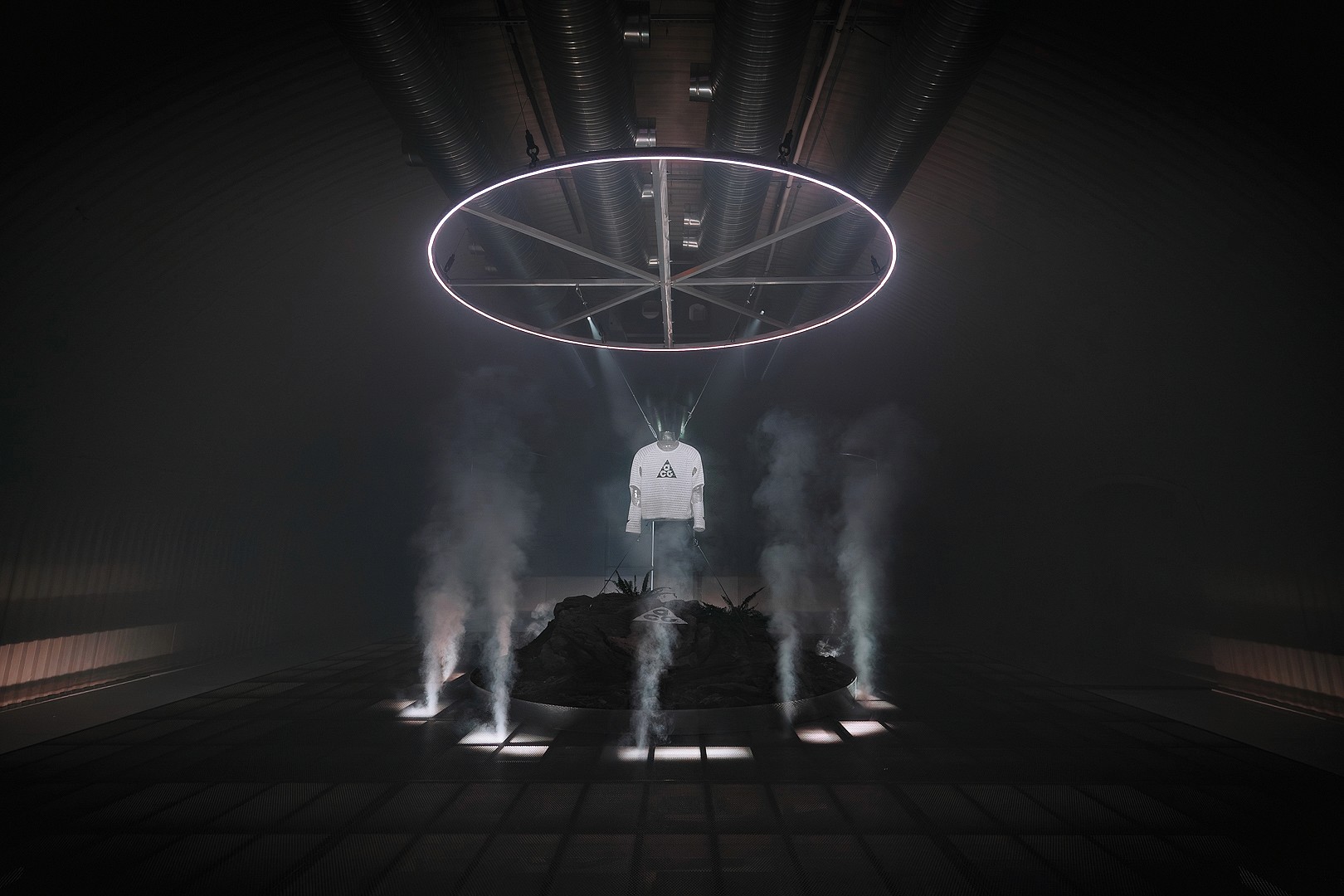
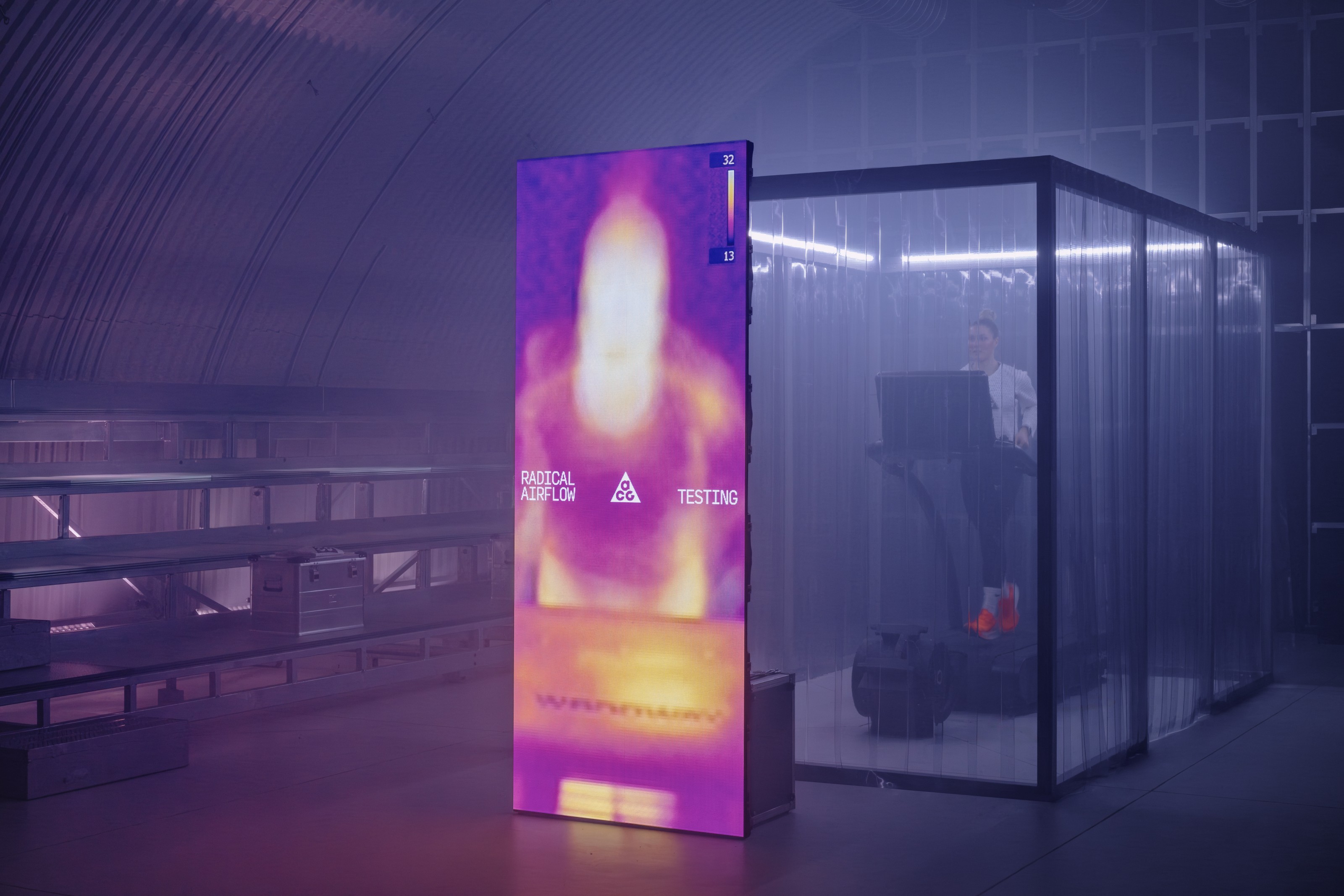
Alongside this thermal innovation, Nike also introduced Radical AirFlow, a revolutionary material designed to maximize the body's natural cooling mechanisms. During a live performance, a runner equipped with the fabric was filmed by thermal camera, revealing in real-time the immediate dispersion of heat.
Designed to meet the most extreme environmental conditions athletes face, Radical AirFlow ushers in a new era of high-performance breathable solutions. This innovation combines Nike ACG's outdoor expertise with the brand's running DNA, merging technicality and adaptability.
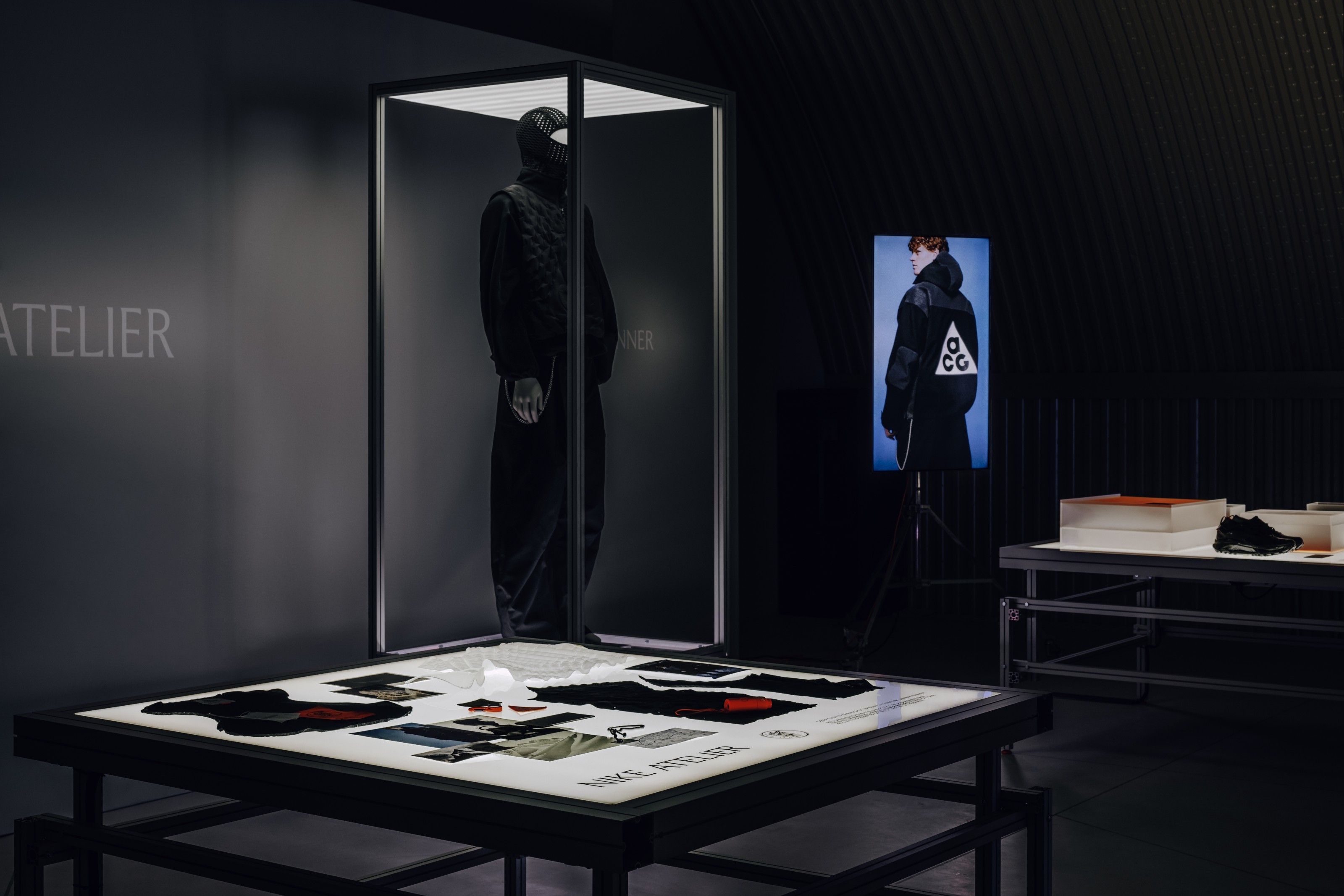
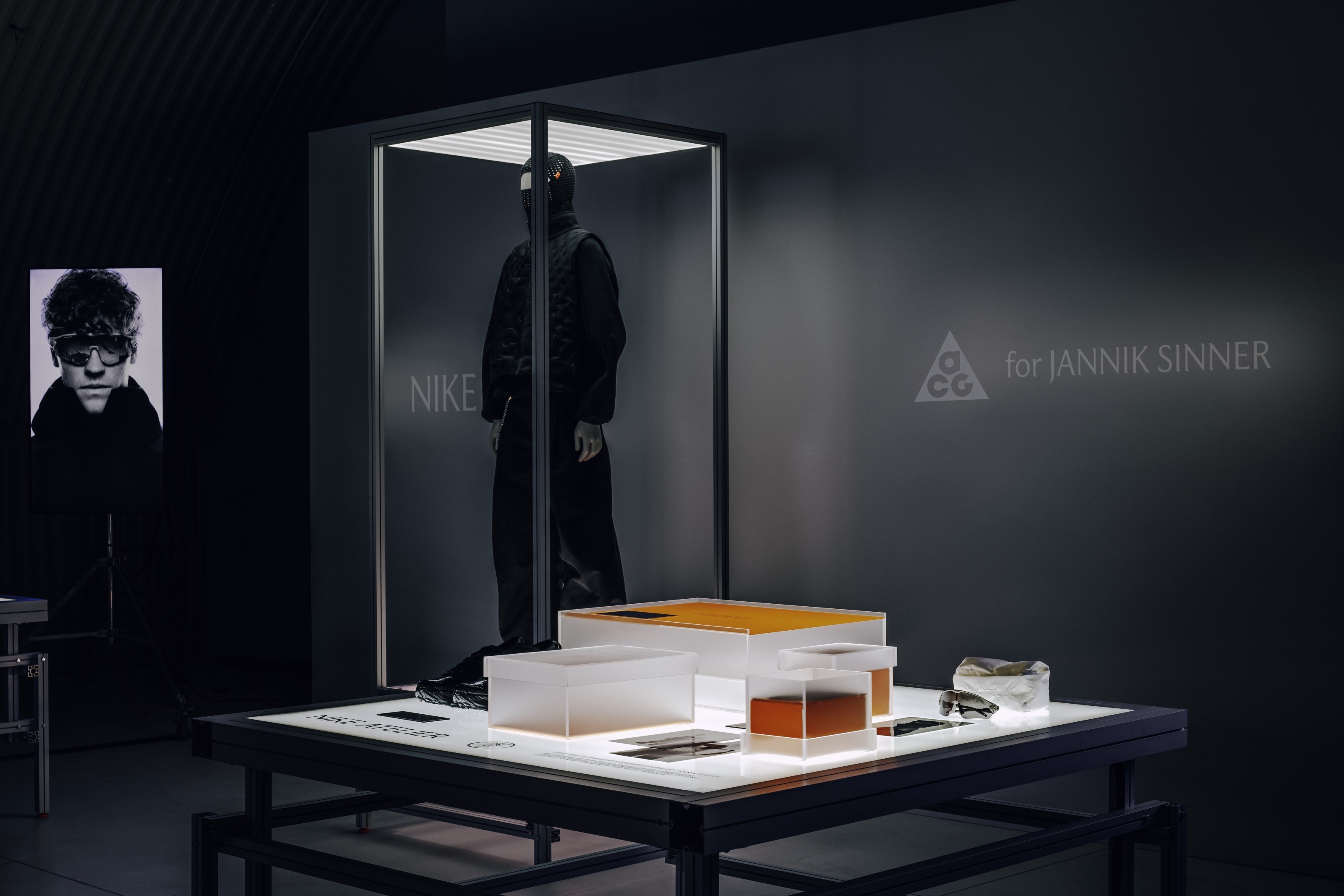
The event concluded with a moment dedicated to Jannik Sinner, at the heart of an exclusive design performance project. The Italian champion collaborated with the Nike teams to create a custom look intended to inaugurate the brand's presence at the largest global winter sports event.
The silhouette, composed of a custom jacket, an insulating A.I.R. vest, tailored pants, and coordinated footwear, blends performance and design into a sculptural aesthetic suited for winter. This creation unveiled during a special event also celebrated the reintroduction of All Conditions Gear (ACG), confirming Nike's commitment to redefining the codes of technical apparel.
In Milan, Unlimited Air was not just an exhibition: it was the demonstration that Nike Air is no longer just a technology, but a global innovation platform. Between living archives, scientific experimentation, and creative vision, the brand asserts one thing: air has far from reached its limits.